World History teaching resources for the high school classroom: lesson plans, worksheets, quizzes and simulation games for KS3, IGCSE, IB and A-Level teachers.
Hitler's Third Reich
The scheme of work which follows uses these interactive simulations designed to "run themselves" in a computer room.
I have also developed some materials for Holocaust Memorial Day.
| 1. | James Spod: Undercover in Nazi Germany! [interactive] Learn about Nazi Germany whilst on a mission to eliminate the evil dictator Adolf Hitler! The original (less comprehensive) game is still available here. |
|
| 2. | Head2Head Virtual Interview with Adolf Hitler! [interactive] Interview the German dictator face to face! Type in whatever question takes your fancy, and receive a historically accurate reply courtesy of a massive database. A fantastic way of investigating Germany 1918-45. |
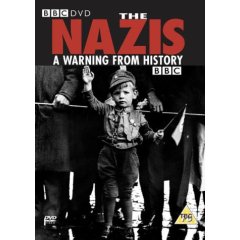
The following worksheets accompany the TV Series The Nazis: A Warning from History (click here to buy from Amazon). They can be used at appropriate points throughout the scheme of work.
1. Chaos and Consent (The system of government in Nazi Germany)
|
 |
1. Hitler's Rise to Power
A comprehensive selection of activities related to Hitler's rise to power can be found on these pages. As a recap, however, students could use the following resource:
| 1. | Helped into Power: Worksheet for the Video A worksheet to accompany the relevant episode from "The Nazis: A Warning from History" (click here to buy from Amazon). |
2. Hitler's Consolidation of Power
| 1. | Hitler's Consolidation of Power: Introduction An overview of the main themes and historical questions to generate student interest. |
| 2. | The Reichstag Fire Roleplay exercise A roleplay exercise designed to take place over a one-hour lesson. Students investigate the evidence and reliability of the main witnesses after dividing into prosecution and defence teams. A separate team of judges prepare "surprise evidence" for each side. This teacher promptsheet is also necessary. |
| 3. | The Night of the Long Knives The Night of the Long Knives (additional resources for the 16-18 age range): |
| 4. | End of Unit Test [interactive] A paper test of 20 questions based on the information in the preceeding worksheets. Students should be given the opportunity to revise for the test by playing this interactive quiz. |
3. Hitler's Rule of Germany
A. |
The Nazi Police State |
| 1. | The Nazi Police State |
| 2. | Flash Interactive Template How did the Nazis rule Germany? From ClassTools.net Interactive Whiteboard Resources |
B. |
Nazi Economic Policies |
| 1. | Nazi Economic Policies Students use the Head2Head Interview with Adolf Hitler to organise information about Hitler's economic policies for Big Business, Small Business, Agriculture and the working classes under key headings in this worksheet. There are also more advanced worksheets for the 16-18 age range: Nazi Economic Policies | Conclusions on Nazi Economic Policies |
C. |
Nazi Social Policies |
| 1. | Nazi Social Policies [1]: Overview |
| 2. | Nazi Social Policies [2]: The European Dimension |
| 3. | Social Policies [3]: The Moral Maze |
D. |
Nazi Youth Policies |
| 1. | Nazi Youth Policies: [1] Schools in Hitler's Third Reich |
| 2. | Youth Policies: [2] Youth Organisations in Hitler's Third Reich |
| 3. | Recommended DVDs re. Nazi Youth Policies Sophie Scholl | Swing Kids | Europa Europa | Edelweiss Pirates |
E. |
Nazi Women's Policies |
| 1. | Nazi Policies towards Women |
F. |
Nazi Religious Policies |
| 1. | Nazi Religious Policies |
G. |
Nazi Propaganda Policies |
| 1. | Nazi Propaganda |
| 2. | Recommended DVDs re. Nazi Propaganda Policies |
H. |
Opposition to the Nazis |
| 1. | Opposition to the Nazis - PowerPoint Starter |
| 2. | When, How and Why should We Oppose? A lesson I designed for PSHE, but which could fit well into a consideration of opposition to the Nazis. |
I. |
The Jews and the Holocaust |
| 1. | Why did Hitler Hate the Jews? - Main worksheet |
| 2. | Nazi Policies for Jews, 1933-39 |
| 3. | Nazi Policies for Jews, 1939-45 |
| 4. | Who was Responsible for the Holocaust? |
| 5. | The Legacy of the Holocaust: Israel and Palestine |
| 6. | How Should we Commemorate the Holocaust? |
| I have also developed some materials for Holocaust Memorial Day. | |
J. |
The Collapse of the Nazi Regime |
| "Downfall" - Feature Film Viewing Notes / Discussion Points Detailed historical context, viewing notes and discussion points to accompany a viewing of the outstanding historical epic. |
| "Who Am I?" Challenge - Nazi Germany Each team will be presented with a clue about a key historical figure. They get 50 points if they guess it correctly. If they wish to 'pass', they get further (easier) clues but the points available steadily decline. An incorrect guess at any point means they get zero points for that round. You can play as many rounds as you wish. It's a great way to revise! |
Interactive quizzes on this topic [tips] |
|||
 |
 |
||
I also teach this topic at A-Level - click here to check out these resources.

© 1998-2024 Russel Tarr, ActiveHistory.co.uk Limited (Reg. 6111680)
1 Torrin Drive, Shrewsbury, Shropshire, SY3 6AW, England
All rights reserved | Privacy Policy | Contact