World History teaching resources for the high school classroom: lesson plans, worksheets, quizzes and simulation games for KS3, IGCSE, IB and A-Level teachers.
G. A Practical Approach to Causation -
Example 2
Another approach is to take a series of key factors, then try to establish links between them.
Stage 1: Spot the Links
After identifying a number of key factors, try to establish connections between them. Come up with as many as you can to start with!
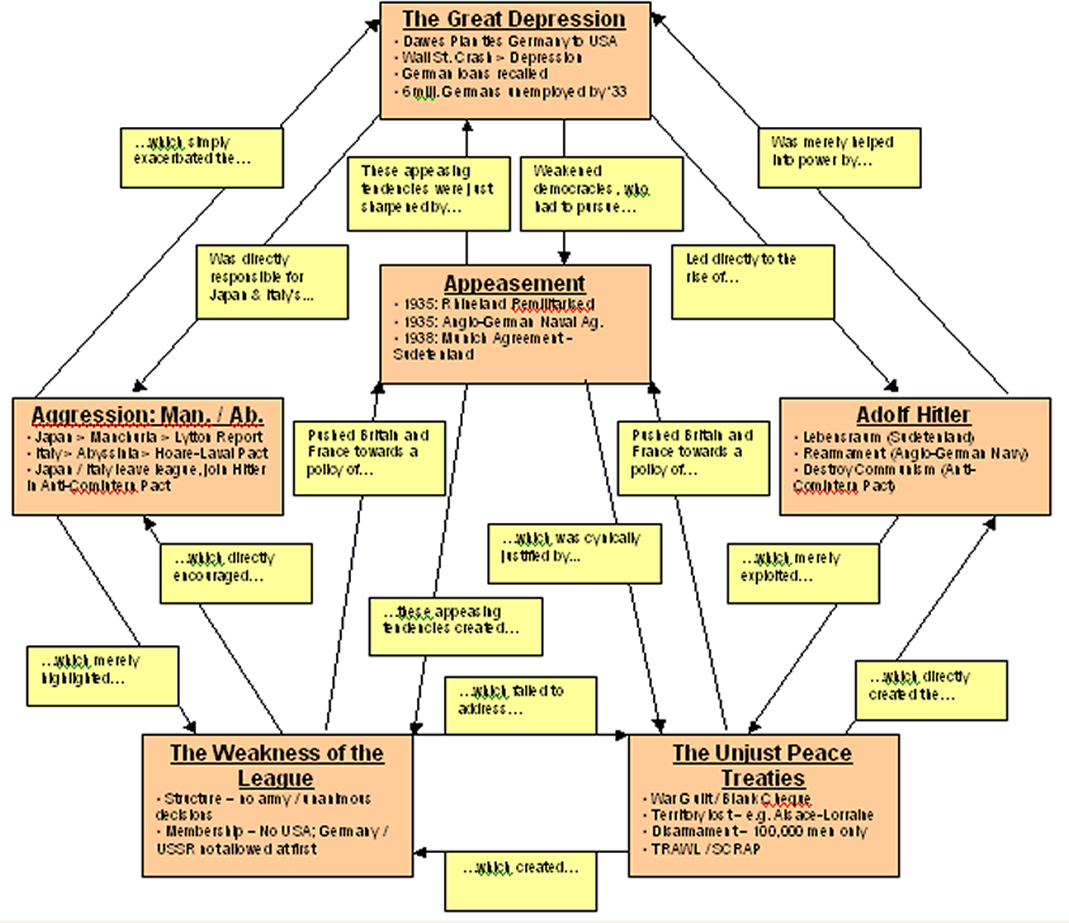
[click here for a full-page view of this diagram]
2. Choose the strongest links
▪ Next, chart a "path" through this diagram which you think makes the most sense.
▪ You need to connect the factors with the absolute minimum of linking statements. Stick to merely the strongest, most convincing links. In the example above, all six factors can be connected with just five arrows - you need to decide for yourself, though, where to start and which direction to go!
▪ Using your completed "path" as an essay plan, produce the first sentence of each paragraph of your essay (in the diagram above, these sentences will lean heavily after the first factor on the text in the yellow boxes).
| < Prev |

© 1998-2024 Russel Tarr, ActiveHistory.co.uk Limited (Reg. 6111680)
1 Torrin Drive, Shrewsbury, Shropshire, SY3 6AW, England
All rights reserved | Privacy Policy | Contact